Prop firm trading futures: how it works and how to choose a firm
Key Takeaways
A futures prop firm gives you a rules-based route to demonstrate your trading approach before accessing firm-provided capital. The details matter: products, risk limits and payout terms can differ substantially.
- Check that the firm offers exchange-traded futures, not only CFDs or other instruments.
- Compare targets, time limits and drawdown rules before paying an evaluation fee.
- Learn each contract’s tick value, expiry and settlement method before trading it.
- Set personal risk limits below the firm’s maximums and track them consistently.
- Read payout conditions and account terms carefully; ask for clarification in writing.
What futures prop firm trading involves
A futures prop firm sets rules for an evaluation in which you demonstrate how you trade, often against a profit target and defined loss limits. If you meet the conditions, the firm may offer access to a funded account or another arrangement for trading and sharing profits. The exact structure varies, so read the account terms rather than assuming every firm follows the same model.
How evaluations provide access to trading capital
An evaluation usually gives you a set of rules to follow while you trade. These may include a profit target, a maximum loss, limits on the number of contracts and a deadline. Passing can lead to a funded stage, but check what “funded” means in the specific agreement, including whether trading is simulated and how payouts are assessed.
For instance, the documented GoldFunding Rapid evaluation is a one-step evaluation product with a 10% target; that description does not mean it offers exchange-traded futures. For a futures-specific explanation of evaluation models, this futures evaluation overview offers another point of reference. Treat any evaluation as a paid opportunity to demonstrate your process, not as a promise of funding or earnings.
The difference between futures and CFDs
A futures contract is a standardised agreement traded on an exchange, with contract specifications and an expiry or settlement process. A CFD is a contract with a provider that tracks the price of an underlying market; it is not the same exchange-traded instrument. Names such as “gold” or “oil” on an account’s product list do not by themselves tell you which instrument you are trading.
That distinction affects pricing, trading hours, contract sizing and what happens at expiry. If you are weighing up spot-linked gold exposure as well, this gold exposure guide explains some of the different ways traders can access the market. Before paying for any evaluation, verify whether the firm actually lists futures contracts or instead offers CFDs or other products.
Who may benefit from trading futures through a prop firm
A prop firm may suit you if you already have a tested approach to futures and want to trade within a defined risk framework, without committing the full account size yourself. It is less likely to suit you if you are still learning contract mechanics or need flexibility that the firm’s rules do not allow. The evaluation fee and the time needed to meet its conditions are also part of the decision.
You should be comfortable with the possibility of failing an evaluation and losing the fee. Keep your expectations grounded: access to a larger notional account does not remove market risk, and following firm rules does not make a strategy profitable. Consider whether your trading method has been tested in conditions similar to those you expect to encounter.

How to compare futures prop firm rules
Rules shape the practical trading environment as much as the advertised account size does. Two firms with similar targets can differ in how they calculate losses, when you may trade, or what happens after you reach a threshold. Read the current terms and any platform rules together, and save a copy before purchasing.
Profit targets, phases and time limits
Check how many stages make up the evaluation, what target applies to each, and whether the clock runs in calendar days or trading days. A multi-stage route can spread the assessment across separate milestones, while a single-stage route may compress the same test into fewer steps. Look for minimum active days as well as a maximum deadline, since both can affect your natural trading rhythm.
The table below shows the questions to answer when you compare structures. It is a prompt for checking terms, not a claim that firms use identical definitions.
| Rule area | What to verify | Why it matters |
|---|---|---|
| Profit target | Amount and whether it applies per phase | Sets the performance threshold |
| Evaluation phases | Number of stages and progression criteria | Determines how you qualify |
| Time limit | Start point, end point and extensions | Can pressure your trade selection |
| Active days | Minimum days and how a day is counted | Affects lower-frequency approaches |
Once you know the mechanics, compare them with your own historical pace. If your strategy typically produces fewer setups, a short deadline or a required number of active days may be a poor fit even if the headline target looks attainable.
Daily loss limits and maximum drawdown
A daily loss limit and a maximum drawdown are separate constraints. The daily limit governs losses over a defined session or reset period; the overall drawdown caps the loss across the account or evaluation. Check whether each is calculated from balance or equity, when the daily measure resets, and whether open positions count towards it.
Also establish whether drawdown is static or trailing. A trailing threshold can move as account value rises, whereas a static threshold stays tied to a stated reference point. These details change how much room you have after profitable trades, so do not rely on a percentage alone. Write down the calculation in plain language before you begin.
Contract, position-size and trading-hour restrictions
Review the permitted contracts, maximum position size and trading sessions. Some firms may restrict particular products or require positions to be closed at specified times. Those conditions can conflict with strategies that depend on holding through a session close or trading less liquid contracts.
Confirm whether the rules use contract counts, lots, notional exposure or another measure. If the firm’s platform displays a limit differently from the written terms, ask which source governs. The same practical discipline applies to exchange hours and scheduled maintenance: know when you can place, manage and exit trades.
News, overnight and automated trading policies
Policies for economic releases, overnight positions, weekends and automated systems are not universal. A firm may allow one behaviour but prohibit another, or make access conditional on an add-on. Read the definitions, including the exact time window around restricted events, rather than relying on a brief marketing summary.
Check how a rule applies to existing positions as well as new entries. If you use automation, verify whether the policy covers expert advisers, scripts, copying or high-frequency activity, and whether there are separate restrictions on account sharing. A vague answer is a reason to pause and seek written clarification.
How to assess costs, payouts and firm reliability
An evaluation’s advertised fee is only one part of its cost. Add-ons, resets, activation charges and the conditions attached to payouts can change the overall value. You are assessing both the commercial terms and the firm’s ability to explain and apply them consistently.
Evaluation fees, add-ons and reset charges
Before paying, calculate the full cost of the route you are considering, including any optional features you genuinely need. A lower entry fee may not be the cheapest route if you expect to pay for extensions or resets. Check whether a reset is automatic, optional, discounted or treated as a new purchase.
Distinguish required charges from optional add-ons, and save the checkout summary. Look for refund conditions, payment currency, renewal terms and any charge that applies after passing. Do not assume that a fee is refundable unless the written policy says so and explains the circumstances.
Payout schedules, profit splits and withdrawal conditions
Find out when you can first request a payout, how frequently requests are processed and what minimum balance or trading-day conditions apply. Then check how the profit split is calculated, whether it changes over time and whether any consistency or best-day rule affects eligibility. The headline percentage alone cannot tell you when or how much you may withdraw.
Read the process for a rejected or delayed request, including what evidence the firm provides and how you can appeal. If a rule limits how much profit may come from a single day, consider whether your normal results could trigger it. A payout policy should be specific enough for you to understand before you start trading.
Checking company details, track record and independent reviews
Look for the legal entity named in the terms, its contact details and a clear route for support. Independent reviews can help you spot recurring questions, but small or unverified samples are not conclusive proof of reliability. Check the dates and details behind a claim, and distinguish an individual report from a general guarantee.
Assess whether the firm explains where trading takes place, how results are verified and what standards apply to a funded account. The purpose is not to find a risk-free provider—there is no substitute for understanding the agreement—but to make an informed decision about the counterparty and the process.
Resolving inconsistent or unclear terms before paying
If the FAQ, checkout page and legal terms appear to disagree, treat that as an open question rather than choosing whichever version is most favourable. Send the firm a precise description of the rule and ask which version governs your account. Keep the reply alongside the terms you accepted.
Useful questions are specific: how is a loss limit calculated, what time does it reset, and what happens to an open position during a restricted event? If you cannot get a clear answer, consider not proceeding. Clarity before payment is more valuable than an informal assurance after a dispute.
How futures contracts affect your trading plan
Futures have contract details that directly influence a position’s potential gain and loss. A plan built around a chart level alone can miss the effect of tick size, expiry or a volatile announcement. Learn the mechanics for each contract you intend to trade before choosing a position size.
Contract specifications, tick values and margin
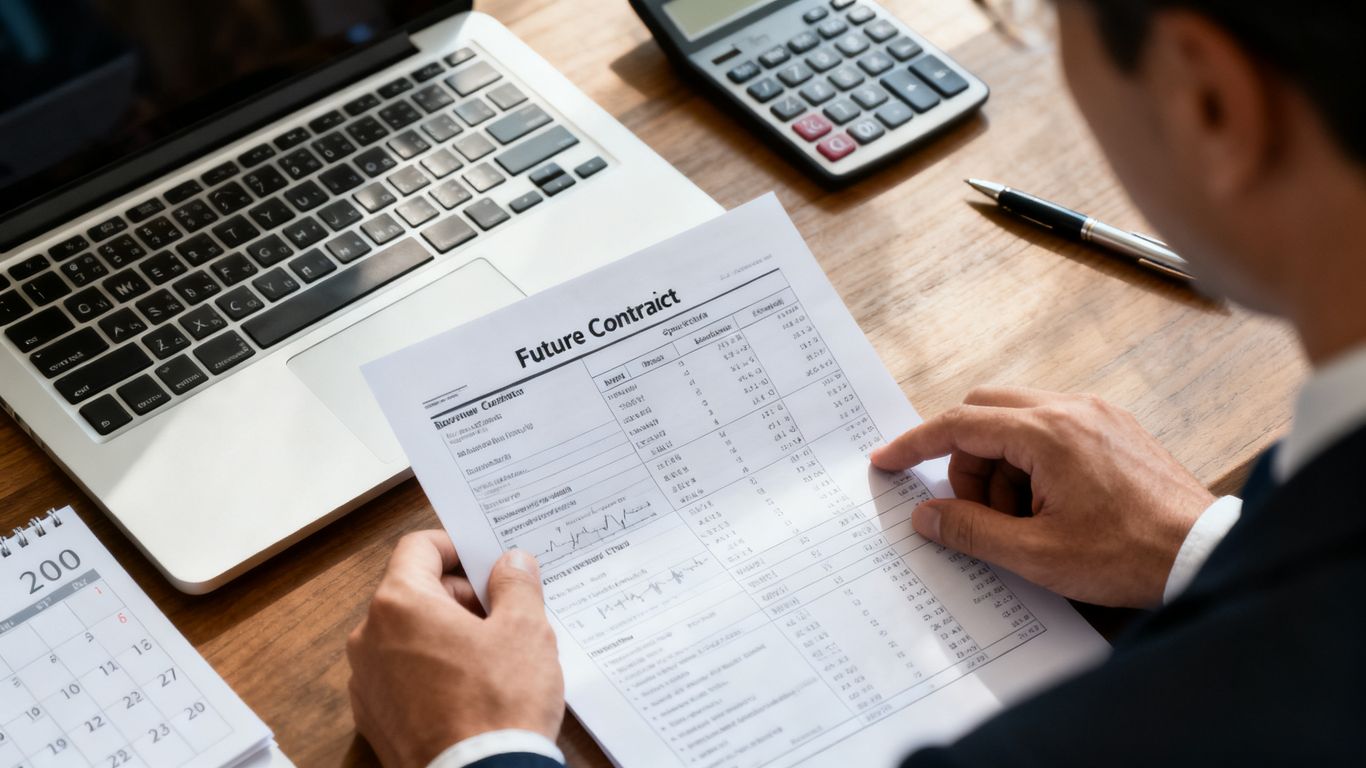
Each contract specifies its underlying, contract size, minimum price movement and tick value. Tick value tells you how much a one-tick price move is worth per contract; multiply that by the number of ticks to your stop and the number of contracts to estimate the planned loss before fees and slippage. Confirm these values from the exchange or a reliable contract specification source.
Margin is the amount required to hold a position under the relevant arrangements, not a measure of the maximum amount you can lose. It can change with market conditions or broker requirements. A position that fits the displayed margin may still be too large for your firm’s loss rules, so use risk limits—not available margin—as the primary sizing constraint.
Expiry dates, rollovers and settlement
Futures contracts have expiry dates, and the method of settlement depends on the contract. Some settle in cash, while others may involve delivery provisions; never assume a position can simply be held indefinitely. Check the exchange calendar and the firm’s position-closing rules well ahead of the last trading day.
If you move exposure from one contract month to another, you are managing a rollover, not extending the same contract. Liquidity and pricing can differ between contract months. Build the relevant dates into your plan and know whether your firm permits holding positions through expiry or requires you to close earlier.
Volatility around economic announcements
Scheduled releases can cause fast price changes, wider spreads and slippage. A stop order may not fill at the exact price you intended when markets move quickly, so the realised loss can differ from the planned amount. Use an economic calendar, know the firm’s news policy, and decide in advance whether you will reduce size, close positions or stay out.
The reaction depends on expectations as well as the published figure, and a sharp move can reverse. Avoid treating an announcement as a predictable shortcut to a target. If you trade around data, practise the plan under realistic conditions and account for the possibility of rapid movement in either direction.
Matching contract size to your drawdown allowance
Start with the loss you are willing to take on one trade, which should sit comfortably below both your personal limit and the firm’s relevant threshold. Estimate the stop distance in ticks, multiply by tick value, then divide your planned risk by that estimated loss per contract. Round down, and allow extra room for slippage and costs.
This is a planning estimate, not a guarantee of the actual exit price. A stop may be affected by gaps or thin liquidity, and losses across several positions can accumulate. If the smallest available contract is still too large for your risk allowance, wait for a suitable setup or choose a different contract rather than forcing the trade.
How to manage risk during an evaluation
The firm’s maximum loss is a breach boundary, not a sensible personal target. Your own plan should leave room for execution errors, volatility and a run of losing trades. A repeatable process makes it easier to respond to the market without making each decision under pressure.
Set a loss limit below the firm’s maximum
Choose a personal daily stop that is meaningfully smaller than the firm’s daily limit, and decide what you will do when you reach it. You might stop trading for the session, reduce size after an early loss or pause after a platform issue. The key is to set the rule while calm and follow it when the day is going badly.
Keep a separate account-level buffer as well. If your equity approaches the firm’s breach threshold, do not assume a winning trade will restore safety. Reduce exposure or stop, and check how open positions and commissions affect the account’s measured loss.
Size positions using tick value and stop distance
Position size should follow the distance between entry and stop, not the amount you hope to make. For each trade, estimate the risk using contract tick value and the number of ticks to the stop. Include expected fees and consider that fast markets can produce a worse fill than the stop price.
When the stop distance changes, recalculate the size. A wider stop with the same number of contracts increases planned risk; a tighter stop is not automatically safer if normal price movement is likely to trigger it. Keep the calculation consistent so you can compare like with like across trades.
Plan for losing streaks and volatile sessions
A strategy can experience several losses in succession without being broken. Decide in advance how many losses or how much drawdown will trigger a pause and review. Avoid increasing size to recover a loss; that can turn a manageable setback into a breach, especially during a fast session.
Before a high-volatility period, check whether your setup still fits the planned risk. If not, reducing size or standing aside is a valid decision. The aim is not to trade every session, but to keep your approach intact through different market conditions.
Keep records of trades and rule compliance
A brief journal helps you separate strategy performance from rule mistakes. Record the contract, entry and exit, planned and actual risk, reason for the trade, and any relevant rule or market event. Review it regularly so you can see whether losses came from the setup, execution or a failure to follow your own limits.
A compact review routine can make the records useful rather than burdensome:
- Save the entry, exit and position size for each trade.
- Note the planned risk and the realised result, including costs.
- Record any rule questions, warnings or platform issues.
- Review patterns weekly and adjust the plan deliberately.
This evidence can help you identify repeated errors before they threaten an evaluation. It also gives you a clearer account of what happened if you need to ask the firm about a rule or a platform calculation.
How to choose a firm that fits your strategy
Choosing a firm is a matter of fit, not simply finding the largest account or the most attractive profit split. Your instruments, holding period and trade frequency need to work within the actual rules. Make the decision from the written terms and your own trading records, not from a headline claim.
Compare rules against your markets and trading style
List the contracts you trade, the hours you trade and how long positions usually remain open. Then compare those habits with allowed products, trading windows, news restrictions and any overnight requirements. A restriction that seems minor to another trader may rule out your own approach.
Check that the account is for futures if futures are what you intend to trade. Product labels can be broad, while the underlying instrument may be a CFD or another form of exposure. Read the contract or product schedule and ask the firm to confirm the exact instrument and venue.
Test whether the evaluation structure is realistic for you
Use your past trades to estimate how often you reach a comparable target, what drawdown you typically experience and how many active days you need. Then compare those figures with the evaluation’s target, deadline and loss rules. Do not rely on a single unusually good week as evidence that the structure will suit you.
For perspective on a different type of evaluation, GoldFunding Classic is documented as a two-step product with a 10% target in its Challenge and a 5% target in Verification. It is an example of a staged evaluation, not a futures account. Check any firm’s current terms directly and judge the structure against your own data.
Verify which products the firm actually offers
Look for a precise list of products and contract specifications, not only a broad reference to commodities or indices. Confirm whether the firm permits the futures contract and contract month you intend to trade, and whether there are any restrictions on position size or holding through expiry. If the product list is ambiguous, ask for a written answer before paying.
This check matters because products with similar names can have different trading and settlement mechanics. A firm that offers a market through a CFD does not thereby offer the corresponding exchange-traded future. Match the instrument to the skills and experience you have actually developed.
Use a checklist before selecting an account
A short final check can catch mismatches that are easy to overlook when comparing account sizes. Confirm the instrument, evaluation rules, fees and payout terms together rather than treating each as a separate selling point. If you are also considering a non-futures evaluation route, GoldFunding Rapid is documented as a one-step evaluation with a 10% target; verify the current product terms and instrument list before deciding whether it fits.
Before you commit, make sure you can answer these questions without guessing: what will you trade, how is loss measured, when can you request a payout, and what happens if a rule is breached? If any answer remains unclear, pause and resolve it first. That final check is part of choosing a firm, not paperwork to rush through.
Conclusion
A futures prop firm can provide a structured way to demonstrate your trading, but the agreement determines what that opportunity actually involves. Confirm the instrument, calculate risk from contract specifications, and make sure the evaluation, payout and trading rules fit your tested approach. If you are exploring a different evaluation model, review the product details carefully before taking the next step.
Frequently Asked Questions
These answers cover common points to check before you choose an evaluation. Always compare them with the firm’s current written terms, since rules and products vary.
What is a futures prop firm?
It is a firm that sets conditions for traders to demonstrate their ability to trade futures, often through an evaluation. Those who meet its rules may gain access to a funded trading arrangement, subject to the firm’s terms.
Do futures prop firms use real or simulated accounts?
The arrangement varies. Some evaluations and funded stages may involve simulated trading, while payout terms may be defined separately. Read the agreement to understand the account type and how trading results are assessed.
Are futures and CFDs the same?
No. Futures are standardised contracts traded on an exchange, while CFDs are agreements that track an underlying price through a provider. Their costs, contract terms and settlement arrangements differ.
What does a drawdown rule mean?
A drawdown rule limits how far an account can fall under the firm’s specified calculation. Check whether it is daily or overall, whether it is based on balance or equity, and whether the threshold is static or trailing.
How do you calculate futures position size?
Estimate the stop distance in ticks and multiply it by the contract’s tick value to find the planned loss per contract. Divide your allowed risk by that amount, then account for fees, slippage and the possibility that the actual exit differs from the stop price.
Can you hold futures positions overnight?
That depends on the firm’s rules and the contract’s trading hours. Check overnight, weekend and expiry policies before opening a position you intend to hold beyond the session.
What should you check before paying an evaluation fee?
Confirm the exact instruments, targets, time limits, loss calculations, trading restrictions, total fees and payout conditions. Ask for written clarification if different pages or documents appear to conflict.