Trading games: how to practise market skills before risking real money
Key Takeaways
Trading games give you a practical way to rehearse decisions before putting real capital under pressure.
- Use a virtual balance that resembles the account you may eventually trade.
- Judge your process, risk and consistency rather than a single impressive result.
- Practise entries, exits, sizing and trade journalling as one repeatable routine.
- Test how your approach behaves during news, overnight gaps and changing volatility.
- Treat a funded evaluation as a rules-based performance test, not a shortcut to income.
What trading games are and how they work
Trading games turn market decisions into a simulated exercise. You choose an instrument, decide whether to buy or sell, set a size and watch the result develop without placing a live order. That makes them useful for learning the mechanics of trading, provided you do not confuse a pleasant score with evidence of readiness.
The difference between trading games and market simulators
The terms overlap, but the emphasis can differ. A market simulator usually aims to reproduce an account, price feed and order process, while a trading game may add points, challenges, historical replays or a leaderboard. Both can help you practise, although a game can encourage short-term competition that has little to do with your actual trading plan.
If you want a more structured introduction, The Stock Market Game uses a virtual portfolio and market events to let learners research investments and track decisions over time. That longer view is quite different from a fast round based on a few minutes of price movement.
How virtual portfolios recreate real market decisions
A virtual portfolio gives you a limited amount of buying power and asks you to make decisions in sequence. You still need to choose an instrument, define an entry, decide where the trade is wrong and consider what happens if several positions move against you. The numbers are simulated, but the decision chain can be made deliberately realistic.
The useful question is not whether you can make a large virtual gain. Ask whether you can explain every position, repeat the same method and stop when your risk limit says to stop.
The skills trading games can help you develop
Used properly, trading games can improve chart reading, order selection and patience. They can also expose habits that are easy to miss when you are only reading about markets. A simulator gives you a place to practise waiting for a setup instead of clicking whenever a candle moves.
For beginners, Trading Game provides a stock-market simulation with lessons, virtual money and market data. You can use that sort of learning environment to become familiar with terminology and basic decisions before building a more demanding routine.
Where simulations differ from live trading
A simulated loss does not affect your household budget, so the emotional response is usually weaker. You may hold a losing position longer, increase size casually or take a trade you would reject with real money. Execution can also differ because spreads, slippage, latency and liquidity may not be reproduced precisely.
That gap does not make simulations pointless. It means you should use them as a rehearsal space, then deliberately add realistic constraints and review whether your behaviour changes when the stakes feel more tangible.
Choosing the right trading game for your goals
The best choice depends on what you are trying to learn. A complete beginner needs clear feedback and simple decisions, while an experienced trader may need historical data, specific instruments or a way to test execution. Before you start, decide whether your goal is education, strategy testing, competition or preparation for an evaluation.
Games for complete beginners
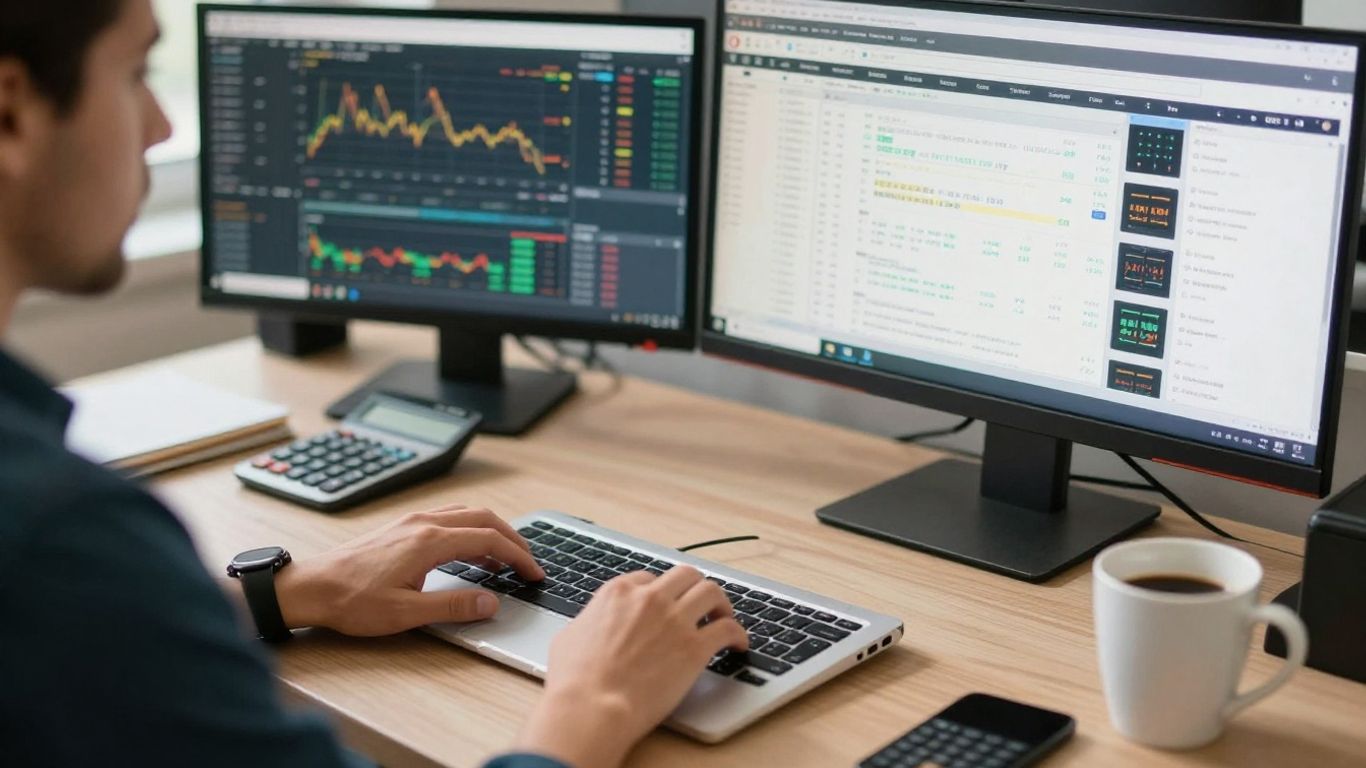
Start with a platform that explains orders, position direction and basic risk without assuming you already understand charts. A small set of instruments is often helpful because it prevents you from hiding uncertainty behind endless choice. Your first target should be a clean record of sensible decisions, not a spectacular percentage return.
Set aside time to learn what market, limit and stop orders mean. Then practise placing each type and writing down why it belongs in your plan.
Simulators for practising technical analysis
If you already understand the basics, choose a simulator that lets you mark levels, compare timeframes and test a defined setup. You might practise support and resistance, moving-average structure or momentum, but keep the method narrow enough to measure. Changing indicators after every loss makes the results difficult to interpret.
A useful routine is to make your chart analysis before entering, then compare it with the outcome later. This separates a well-reasoned losing trade from an impulsive one that happened to work.
Platforms focused on forex, indices, commodities and crypto
Different instruments produce different rhythms. Forex can be active around sessions and economic releases, indices may move sharply at market openings, commodities can react to supply news, and crypto may trade continuously with large swings. Pick a simulator whose instruments and hours resemble the market you expect to trade.
Do not assume that a method transfers unchanged between them. A setup that feels comfortable on one market may be too slow, too volatile or too expensive to execute on another.
Competitive games, leaderboards and prop-firm challenges
Leaderboards can make practice engaging, but they also reward behaviour that may be unsuitable for disciplined trading. If the scoring system favours the biggest short-term return, you may learn to overtrade or take oversized positions. Competitive formats are more useful when you treat the score as secondary to drawdown, consistency and decision quality.
Trader2B Stock Market Trading Game is an example of a format built around historical market replays and competition. That can be useful for practising timing, as long as you review the process behind your ranking rather than chasing the ranking itself.
How to use trading games effectively
A simulator only teaches you what you repeatedly do inside it. If you trade without rules, you are practising improvisation; if you change the balance and timeframe whenever results disappoint, you are measuring very little. Build a simple routine and keep it stable long enough to learn from it.
Set a realistic virtual starting balance
Choose a balance that resembles the capital or evaluation size you may realistically use. A very large account encourages casual sizing and makes ordinary losses look harmless. A realistic balance forces you to think in percentages, drawdown and opportunity cost.
Write down the starting balance, instruments and trading hours before you begin. Resetting after a poor week removes information that could have shown you where the process failed.
Create rules for entries, exits and position sizing
Your rules do not need to be complicated. Define the conditions that allow an entry, the point that invalidates the idea and the amount you are willing to lose if that point is reached. Then decide how many positions you can hold at once and whether correlated trades count as one risk cluster.
A compact pre-trade checklist might include:
- Is the setup present on the timeframe you selected?
- Where is the stop, and what is the planned monetary risk?
- What event or market condition would invalidate the trade?
- Does the position fit your daily loss and exposure limits?
That checklist should slow down impulsive entries without turning every decision into a bureaucratic exercise. After enough repetitions, the questions become part of your normal preparation.
Record each trade in a journal
A journal should capture more than entry price and outcome. Note the setup, time, market context, planned risk, execution quality and your emotional state. Add a screenshot if the chart matters, but write the reasoning in plain language so you can recognise repeated mistakes.
You are looking for patterns across a sample of trades, not a story that explains one winner. A sequence of small losses may reveal poor timing, unsuitable market conditions or a rule that is too vague to follow.
Review performance instead of chasing virtual profits
Set a review point after a defined number of trades or a full trading week. Examine average risk, win rate, average win, average loss, drawdown and rule adherence. Profit matters, but it is only one output of the process.
Process quality matters more than a lucky result when you are deciding whether to move on. If the virtual account is profitable but the journal shows random sizing and missed stops, you have more work to do.
Risk management lessons trading games should teach
Risk management is where a simulation either becomes useful or becomes entertainment. You should practise limits before you need them, because a rule remembered only after a loss is not much of a rule. Think in terms of the account’s survival and repeatability rather than the largest possible daily gain.
Understanding daily loss and overall drawdown
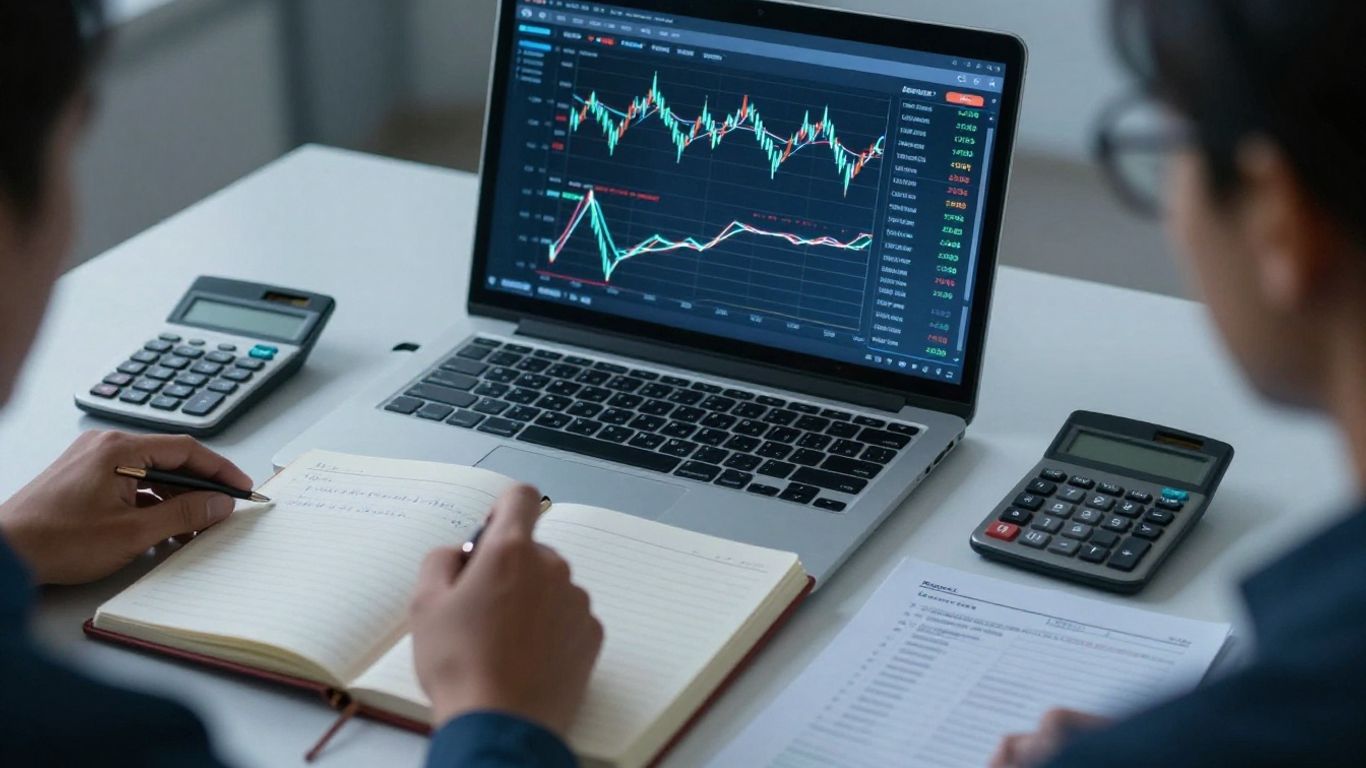
Daily loss measures how much room you have used in one trading day, while overall drawdown measures the distance from the account’s permitted loss boundary. Track both in percentage and cash terms. A position that seems small in isolation can become dangerous after several earlier losses.
If you are preparing for a funded evaluation, model the limits explicitly. For example, GoldFunding.io documents a 5% maximum daily loss and 12% maximum overall drawdown, both linked to the initial account balance. Treat those figures as hard boundaries in your practice rather than targets to approach.
Avoiding oversized positions and gamble-style trading
A trading game makes it tempting to risk a large portion of the balance because the money is not real. That teaches the wrong reflex. A single position can dominate your result, conceal whether your method works and make a normal losing sequence impossible to withstand.
Use a fixed risk amount or a narrow risk range, then reduce size when volatility or uncertainty rises. If one trade decides whether the account survives, the position is probably too large for the lesson you are trying to learn.
Managing the 40% best day rule
Some evaluation and payout structures limit how much of the target or payout-cycle profit can come from one day. GoldFunding.io describes a 40% best day rule: one day cannot produce more than 40% of the profit target during an evaluation, or more than 40% of total profit in a funded payout cycle. It is described as a soft breach, meaning you continue trading until profits are distributed sufficiently.
You can practise this by tracking your daily contribution rather than celebrating a sudden spike. The goal is not to suppress a good day artificially, but to build a pattern that does not depend on one unusually aggressive session.
Testing stop-losses, diversification and consistent risk
A simulator lets you compare what happens when every trade has a stop, when stops are moved, or when you hold several related instruments. It also lets you test whether diversification genuinely reduces concentration or merely creates more positions with the same underlying exposure.
Change one variable at a time and keep the sample large enough to be informative. Then write down whether the alteration improved drawdown, execution or decision quality, rather than judging it only by total profit.
Practising different trading conditions
Markets do not behave identically from one session to the next. Quiet ranges, sharp trends, gaps and sudden news moves can all expose weaknesses that are invisible in a smooth backtest. Use your trading games to create uncomfortable but plausible conditions, then record how your method responds.
Holding positions overnight and over weekends
Overnight and weekend holding introduces gaps, changing liquidity and the possibility that price opens far from your planned exit. Simulate the decision to hold, close or reduce before the market shuts. Compare the intended risk with the worst movement that occurred while you were away from the screen.
This exercise is especially useful if your future account permits holding outside normal sessions. It helps you distinguish a strategy designed for intraday control from one that can tolerate periods without active management.
Simulating news events such as NFP, CPI and FOMC
Major releases can create fast movement, wider spreads and slippage. Mark the release time on historical charts and replay the period without assuming that your order would have filled at the most convenient price. Practise having a rule for whether you trade, wait or reduce exposure.
If your method depends on a clean technical pattern, test what happens when a scheduled announcement interrupts it. The answer may be to avoid the window, use smaller size or accept that the setup is not suitable for event-driven conditions.
Comparing manual trading with EAs and algorithmic systems
Manual practice shows how you interpret information and manage decisions in real time. Algorithmic practice focuses more on coded conditions, data quality, execution and the behaviour of the system when markets change. Keep those tests separate so that a manual result is not presented as evidence for an automated strategy.
A proper comparison uses the same market period, risk assumptions and cost assumptions. Review not only returns, but also trade frequency, drawdown, error handling and what happens when the system meets an untested condition.
Testing strategies across different market environments
A strategy should be examined in trends, ranges, high-volatility sessions and quieter periods. Historical replay can help you gather examples, while a forward simulation shows whether you can follow the rules without hindsight. Neither approach removes uncertainty, but together they reveal where the method is fragile.
Try to disprove your idea. If it works only under one narrow combination of market speed and direction, you need to know that before treating the result as dependable.
A useful video can demonstrate order placement or chart replay, but watch it as an explanation of process rather than a promise of results. Pause before each example and decide what you would do, then compare your reasoning with the presenter’s.
Moving from trading games to a funded account
A funded evaluation adds rules, time pressure and a formal pass-or-fail structure to the practice environment. That does not make it a natural next step for every profitable simulation. You should move only when your results are repeatable, your risk is controlled and you can explain how you behave after a losing streak.
When simulated results are consistent enough
Look for a meaningful sample across several market conditions, not one exceptional week. Your average risk should be stable, your losses should remain within planned limits and your journal should show that you followed the method. If the result depends on one oversized trade, it is not yet a reliable basis for an evaluation.
Run a final rehearsal with the exact balance, daily limit, overall limit and time window you expect to face. That exposes practical problems before a fee and formal account rules are involved.
Comparing Rapid and Classic evaluation routes
GoldFunding.io documents Rapid as a one-step evaluation: you complete the GoldFunding Challenge with a 10% profit target while respecting the drawdown rules. Classic is a two-step route, with a 10% Challenge target followed by a 5% Verification target. Both tracks use the same 5% daily loss limit and 12% maximum overall drawdown.
Your choice should reflect how you trade, not how quickly you want the process to finish. One stage may suit someone who can demonstrate consistency in a single phase, while two stages provide another opportunity to prove that performance is repeatable.
Preparing for 5% daily and 12% overall loss limits
Build these limits into your simulator from the first trade. A daily loss boundary should include realised losses and the effect of open positions according to the rules you are practising against. An overall boundary should be treated as permanent room you cannot casually spend after a winning run.
Use smaller internal limits if necessary. Stopping at 2% or 3% in practice can help you avoid drifting towards a formal 5% boundary when several trades go wrong.
Planning around minimum trading days and time limits
A target can tempt you to force trades, especially when the calendar is running down. GoldFunding.io states that evaluations require at least 7 active trading days per phase and allow 30 days to reach the profit target, with certain add-ons changing those conditions. Plan your sessions in advance and leave room for days when no valid setup appears.
The best preparation is not trading every day for its own sake. It is learning to distinguish an active day with a justified decision from a day where staying flat is the more disciplined choice.
Common mistakes when using trading games
The most common errors are behavioural rather than technical. A simulator removes financial pain, so you may take risks that would feel unacceptable in a live account. It can also turn learning into a hunt for an impressive score, which makes careful review feel slow.
Treating virtual money like real capital
Virtual money has no direct consequence, and that changes your psychology. You may widen a stop, add to a loser or hold through an event because there is nothing immediate to lose. Notice those behaviours instead of pretending the simulation feels identical to live trading.
One practical fix is to use a balance and risk unit that feel concrete. Another is to pause after each rule breach and record what you were trying to avoid by taking the decision.
Changing strategies after short losing streaks
Every sensible method has losing trades. Switching after three or four losses can leave you with a collection of half-tested ideas and no useful sample. Before changing the strategy, check whether you followed it and whether the market conditions were inside its intended scope.
If you do make a change, label it as a new test. Do not merge its results with the old version, because that makes comparison almost impossible.
Ignoring spreads, slippage and execution speed
A simulator that fills every order at the displayed price may make a marginal strategy look better than it is. Add a realistic allowance for spread and slippage where possible, particularly around fast markets. Consider whether your entry would still make sense if the fill were worse by a few points.
Execution speed also matters for short-term approaches. A method that depends on perfect timing may be fragile even when its chart entries look attractive in hindsight.
Confusing a high score with a robust trading process
A high score can come from a favourable market period, a lucky entry or excessive risk. A robust process is easier to describe: it has defined conditions, measured exposure, recorded decisions and losses that remain survivable. Those qualities may look less exciting, but they transfer better when conditions change.
When you finish a simulation, ask what you learned and what you would repeat. If the only answer is that you ranked highly, the game has not yet done its most useful job.
Conclusion
Trading games are most valuable when you use them as disciplined rehearsals rather than entertainment. Set realistic constraints, record your decisions, test difficult conditions and measure consistency before you consider a funded evaluation. The aim is not to remove uncertainty from trading, but to understand your own behaviour before real stakes make every mistake more expensive.
Frequently Asked Questions
Are trading games useful for complete beginners?
Yes, if you use them to learn order types, chart basics, position sizing and risk limits. Begin with simple instruments and focus on explaining each decision rather than maximising the virtual return.
Can a trading game guarantee success in live markets?
No. Simulation can build familiarity and reveal habits, but it cannot reproduce every emotional, execution and liquidity challenge of live trading. Treat the results as evidence to review, not a guarantee.
How much virtual money should you start with?
Choose a balance that resembles the account size or evaluation you may realistically use. A realistic figure makes percentage risk, drawdown and position sizing more meaningful.
Should you use stop-losses in a simulator?
Usually, yes, if your intended method uses them. Practising where a trade is invalidated helps you measure planned risk and prevents the simulation from rewarding indefinite holding.
How long should you practise before trading live?
There is no universal number of days. Use a meaningful sample across different conditions, check that your risk is consistent and make sure your journal shows rule-following rather than a short run of luck.
Are leaderboards helpful for learning?
They can make practice engaging, but they may encourage excessive risk if ranking depends on short-term returns. Use drawdown, consistency and decision quality as your primary measures.
What should you review after a simulated trade?
Review the setup, entry, exit, planned risk, execution, market context and your emotional state. Then ask whether the result came from following a repeatable process or from an avoidable impulse.