Gold trading holiday today: is the market open and what should traders check?
Key Takeaways
A holiday does not give every gold market the same timetable, so check the instrument and your broker’s schedule before planning a trade. If you do trade, account for the possibility of thinner liquidity and less reliable price action.
- Confirm whether the holiday affects the relevant exchanges and trading centres.
- Check your broker’s XAU/USD hours, time zone and holiday notices.
- Expect liquidity, spreads and price movements to differ from a normal session.
- Use key levels as reference points, not as automatic trade signals.
- Keep risk measured and wait for clearer conditions if the market is erratic.
How to check whether gold trading is open today
The answer to “is gold trading open today?” depends on which gold product you mean and the hours set by the firm providing access to it. A public holiday may affect one market or session without closing every route to gold trading. Before you act on a search result or yesterday’s routine, confirm the schedule for your own instrument. That small check can save you from planning around a session that is closed, shortened or trading under different conditions.
Identify the holiday and affected markets
Start with the name and date of the holiday, then identify which countries or financial centres observe it. A bank holiday in one region may coincide with a regular trading day elsewhere, while a holiday observed in several major centres can change activity more broadly. The key is not to assume that “market holiday” means every gold market is shut.
Check official exchange calendars and relevant market notices for the places connected to your product. For an overview of why price can respond to headlines and session activity, you can also read this guide to gold trading news. It is context for your research, not a substitute for a current trading-hours notice.
Check your broker’s XAU/USD trading hours
If you trade XAU/USD through a broker, look for the exact instrument schedule in its platform or help centre. The label may appear as XAU/USD, gold or a broker-specific symbol, and its hours may not match those of an exchange-traded gold contract. Do not infer today’s availability from the fact that the chart is still visible or that another instrument is trading.
A useful first pass is to compare the kinds of schedule information you may find. The table is a reminder of what to verify, not a universal timetable:
| Schedule detail | What to confirm | Why it matters |
|---|---|---|
| Instrument | The exact XAU/USD or gold symbol | Different products can follow different hours |
| Session status | Open, closed, late opening or early close | A shortened session changes your available trading window |
| Trading break | Any daily pause or maintenance window | A chart may stop updating temporarily |
| Order handling | Whether orders can be placed or managed | Platform access and execution availability may differ |
Once you have the broker’s schedule, compare it with your own plan and remove any setup that depends on a period when the instrument is unavailable. If the information is unclear, ask the broker rather than relying on a third-party calendar.
Confirm the time zone used for the schedule
Trading notices may use the broker’s server time, a local exchange time or a named time zone such as GMT. Check the heading and any footnotes, then convert the stated hours to your own local time before setting alerts. Daylight-saving changes can make a familiar session appear an hour earlier or later than you expect.
Keep the original time zone beside your conversion in your notes. That way, if you revisit the schedule or compare it with a notice issued elsewhere, you can see which clock each time refers to and avoid a simple but costly mix-up.
Look for special holiday notices or early closes
A standard weekly schedule may not cover holiday exceptions. Check the broker’s latest notices for a late open, an early close, altered breaks or a temporary change to order availability. For a practical example of the kind of information that can appear on a holiday schedule, review the CFD holiday hours, then verify the hours that apply to your own account and instrument.
Treat a notice as time-sensitive: schedules can be updated, and an old announcement may refer to a different year or product. If you cannot confirm the current hours, waiting until the broker clarifies them is more sensible than assuming normal trading has resumed.
Why gold trading hours can vary on holidays
Gold is traded through more than one type of market, and those markets do not necessarily share a single opening bell. Your available hours can depend on whether you are looking at an exchange-listed contract or a broker-provided product, as well as on the holiday calendar in relevant financial centres. A published schedule is therefore more useful than a broad claim that gold is either “open” or “closed”. Allow for the possibility that a market is technically available while activity is subdued. That difference matters when you plan an entry, manage an open position or decide to stand aside.

Understand the difference between exchange and CFD hours
Exchange-traded gold contracts follow the exchange’s own trading calendar and session rules. A gold CFD is a different product, and its available hours are set by the provider; it may reference gold prices without sharing the exchange contract’s exact schedule. That is why one instrument’s timetable cannot safely be used as a proxy for another.
If you are still comparing the ways people access gold prices, this guide to gold trading explains the distinction between XAU/USD and different gold products. For a decision about today’s opening hours, though, the instrument specification and the current schedule remain the practical sources to check.
Check how public holidays affect key trading centres
A holiday in a major financial centre can reduce participation even when your own platform continues to quote prices. The effect depends on which centres are observing the holiday and what else is happening in markets. A quiet local calendar does not guarantee that the wider trading day will feel normal.
This is particularly relevant when you compare activity across the Asian, London and New York sessions. One session may be active while another is affected by a holiday, leaving price action less consistent than on a typical working day. Check the calendar for each relevant centre rather than treating the date as a single global switch.
Allow for broker-specific maintenance breaks
Even on an otherwise open day, your provider may have a scheduled break for maintenance or a brief interruption to trading. Such pauses are separate from a public holiday, but they can affect when you can place, amend or close a trade. Find the information in the instrument details or service notices and note whether it applies in the same time zone as the main holiday schedule.
If the platform shows a brief halt, do not assume that an order will behave as it would during continuous trading. Check the broker’s instructions on order handling, and avoid leaving a plan dependent on a precise action during a known break.
What holidays can mean for gold price action
A calendar change can affect how much participation is available to support price discovery. You may see less consistent activity, but a quiet market is not necessarily a predictable one: a small number of orders or a fresh headline can still move price. Treat familiar levels as useful reference points, while recognising that holiday conditions may make the reaction around them less dependable. The aim is not to forecast a particular move from the date alone. It is to judge whether the conditions you are seeing are good enough for your usual approach.
Expect thinner liquidity when major markets are closed
When a major trading centre is closed, the pool of participants may be smaller than usual. That can make price movement less representative of the broader market’s view, particularly if activity is concentrated in a narrower part of the day. It does not mean that every holiday session will be quiet, nor that price cannot move sharply.
Use observed activity as part of your assessment. If the market is moving on little follow-through, or if the range is narrow and participation appears subdued, consider whether your normal entry criteria still make sense. A holiday label alone is not a signal to buy or sell.
Watch for wider spreads and uneven price movements
Check the live spread and the way price is moving before you enter. Conditions can vary by provider and time of day, so avoid assuming that costs and execution will match a normal session. Sudden jumps, short-lived spikes and stop-start movement can make a clean-looking chart harder to trade in practice.
If the spread or volatility is materially different from what you planned for, it may be better to reduce exposure or wait. A chart pattern is only one part of a trade; the cost and quality of execution matter too.
Treat breakouts and support tests with extra caution
A breakout through resistance or a brief dip below support may attract attention, but thinner conditions can make the first move harder to interpret. Give price room to show whether it can hold beyond the level, return to test it, or quickly move back into its previous range. A single wick is not the same as a confirmed structural change.
For a more complete approach to reading an active chart, use this live gold chart guide alongside your own levels and risk limits. The useful question is not simply whether a level has been touched, but whether price action provides enough confirmation for the setup you intended to trade.
How to assess gold’s technical structure in a quiet market
A quieter session calls for a careful read of context, not a fresh set of rules. Begin with the structure already visible on the chart, then note where price is relative to nearby support, resistance and points of interest. Keep the session and the holiday conditions in view when judging whether a move has weight. GoldFunding publishes start-of-week, mid-week and post-week technical analysis; its gold market articles offer examples of tracking levels and conditional scenarios. Those examples can inform your process, but your own chart and current conditions should guide your decisions.
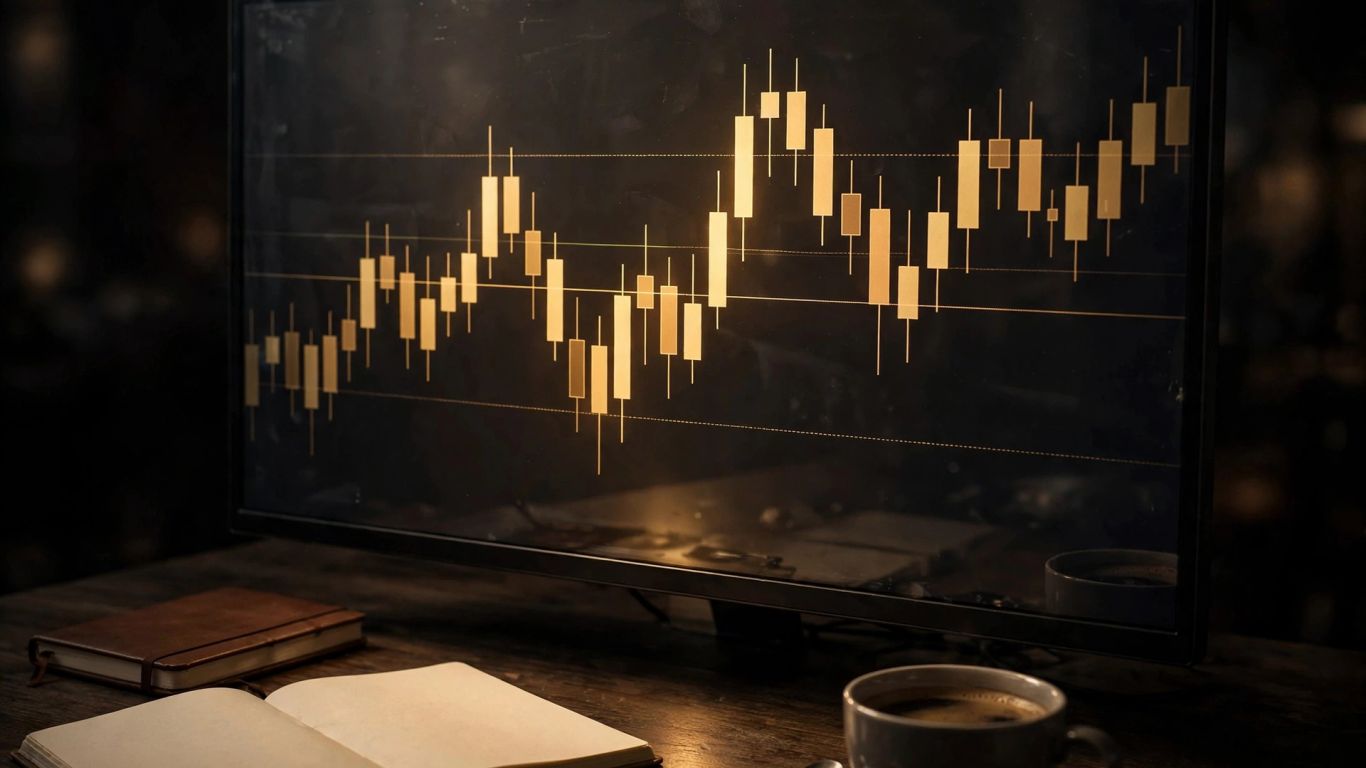
Mark current support, resistance and points of interest
Start by marking the levels that have already mattered on the timeframe you are trading. These might include a recent swing high or low, a range boundary or a zone where price previously reacted strongly. A point of interest is a place to pay attention, not a promise that the market will turn there.
Keep the chart uncluttered and distinguish the levels you are watching from those that would change your view. If price is sitting in the middle of a broad range, there may be no useful trade until it approaches a clearer boundary or develops a new structure.
Distinguish consolidation from a confirmed structure shift
A pause after a strong move can be consolidation rather than a reversal. Look at whether price continues to hold the relevant range, whether swings are being respected and whether a decisive break has actually occurred. One candle beyond a level, especially in thin conditions, may not provide enough evidence on its own.
It can help to compare the move with the larger structure. A break of structure or change of character should be judged in context, with attention to what price does after the initial break. If the market returns into the prior range, that weakens the case for treating the first push as a lasting shift.
Look for confirmation before acting on a liquidity sweep
A quick move through an obvious high or low can collect stops and then reverse, but the sweep itself does not tell you what will happen next. Look for the response: does price reclaim the level, hold beyond it, or continue to move away? The answer may take time, particularly when the session is quiet.
A chart walkthrough can be useful for seeing how levels and structure fit together, but it should not replace your own analysis. The following video placeholder sits alongside that process; use it as a prompt to review your chart rather than as a trade instruction.
After a sweep, wait for the sort of confirmation your plan requires, such as a clear rejection or a break-and-retest. If the evidence is mixed, there is no need to force a position simply because price briefly crossed a level.
Reassess bias if price breaks a key level decisively
A decisive break of a level that has been supporting your bias is a reason to reassess, not to defend the original view automatically. Consider whether price holds beyond the level, how the next swing develops and whether the move is consistent across the timeframe you use. A quick return through the level may suggest a failed break; sustained acceptance beyond it may warrant a different read.
Write down the condition that would change your view before the next session. That makes it easier to respond to price as it develops, rather than shifting your interpretation only after a position is under pressure.
How to manage risk when trading gold around a holiday
Risk controls matter before you enter, and holiday conditions can make them more important. You may face a wider spread, a sudden move or a brief change in availability, so check whether your intended size and stop still make sense under those conditions. If they do not, adjust the plan or choose not to trade. GoldFunding offers Classic and Rapid evaluation processes, but whatever route you use, you remain responsible for understanding its rules and managing your exposure. Keep the focus on what you can control: the size of the position, the level that invalidates the idea and whether the market is suitable for your setup.
Reduce exposure if spreads or volatility become unpredictable
If the spread widens or price begins to jump unevenly, a position that seemed modest under normal conditions may carry more risk than you intended. Recheck the cost of entry and consider reducing size or standing aside. Do not widen your risk simply to preserve a preferred trade idea.
Use a short pre-trade check when conditions are uncertain. It helps turn a general warning about holiday markets into decisions you can make before sending an order:
- Is the instrument open for the full period your plan requires?
- Is the current spread within the range you considered acceptable?
- Is your position size still appropriate for the stop distance?
- Do you have a clear level that invalidates the trade idea?
If one of those answers is unclear, pause and resolve it before entering. A skipped trade is preferable to taking exposure without knowing how the changed conditions affect your risk.
Set stops with gold’s price swings in mind
A stop should reflect the point at which your trading idea is no longer valid, while also taking account of the market’s current movement. A stop that is too close to normal price fluctuations may be triggered before the idea has had room to develop. Moving it farther away without adjusting position size, however, can increase the amount at risk.
Work from the level that invalidates the setup, then calculate the position size that fits your own risk limit. If holiday volatility makes that distance impractical, reconsider the trade rather than forcing a smaller stop into the chart.
Avoid assuming that a thin-market move will continue
A quick move in a quiet market can look convincing, but a burst of activity does not guarantee follow-through. Watch for price to hold a level or develop a clear sequence of swings before treating the move as continuation. If the market returns to its prior range, update your read instead of relying on the first impulse.
Keep your expectations conditional. A move may extend, stall or reverse; build your plan around what price actually does rather than assuming that low participation will amplify a direction you already favour.
Check economic announcements around the holiday
A holiday does not necessarily mean that the economic calendar is empty. Check for scheduled releases and relevant central-bank or government announcements in the hours before and after the session you plan to trade. News can affect gold through changes in expectations, currencies and risk sentiment, and can arrive when normal participation is already reduced.
Use a reliable calendar and note the release time in the same time zone as your trading schedule. If a major event sits close to a planned entry, decide in advance whether your approach calls for avoiding it, reducing exposure or waiting for the initial reaction to settle.
How to plan your next gold trading session
A useful plan for the next session begins with the calendar and ends with clear conditions for action. Note when the relevant instrument is expected to return to its usual schedule, then review what price did during the quieter period. The first active session after a holiday may provide a clearer read, but it is not guaranteed to do so immediately. Prepare for more than one outcome and keep your risk unchanged until the evidence supports a change in approach. That way, you can respond to the market without treating a date on the calendar as a forecast.
Note when normal liquidity is expected to return
Use the broker’s notice and the relevant market calendars to identify when regular participation is expected to resume. “Expected” matters: a published schedule tells you when trading is available, not how much activity will return or how price will behave. Put the time in your own calendar and check for any follow-up notice before the session begins.
If you are uncertain whether a session is back to normal, compare live conditions with what you typically observe rather than assuming the holiday effect has disappeared at a particular minute.
Review price action across the Asian, London and New York sessions
Look at how price behaved across the sessions rather than judging the whole day from a single candle. Note where the market opened, how it reacted at your key levels and whether later sessions confirmed or rejected the earlier move. Session-by-session review can help you separate a genuine shift in structure from a brief holiday-period excursion.
You might record the main observations in a simple sequence: the level tested, the response, and what would confirm or weaken your current view. That record makes it easier to compare sessions without turning every move into a new trading signal.
Build conditional scenarios around nearby levels
Set out what you would do if price holds a nearby support area, breaks resistance decisively or moves back into the prior range. Each scenario should have a condition that can be observed on the chart and a point at which the idea no longer makes sense. Avoid writing a one-way forecast that depends on the market behaving exactly as you hope.
Conditional planning leaves room for uncertainty. If none of your scenarios develops, you can wait; if a level breaks and holds, you can assess whether the setup still fits your risk limits before acting.
Wait for clearer confirmation before increasing risk
A return to normal hours does not itself confirm a trade. Let the market establish its behaviour, and look for the structure or follow-through your plan requires before increasing exposure. If price remains choppy, spreads are still unusual or the setup is unclear, maintain your existing limits or stay out.
Review the plan after the session, including whether your assumptions about hours and liquidity were accurate. That feedback will make your next holiday-period decision more grounded in observed conditions rather than habit.
Conclusion
To answer “gold trading holiday today”, check the exact instrument, the broker’s current schedule and the time zone before you build a plan. Then treat holiday price action with care: reduced participation can make familiar levels less dependable, so use confirmation and keep risk within limits. If you are exploring a funded trading route, you can explore GoldFunding, a proprietary trading firm that provides skilled traders with access to capital through an evaluation process.
Frequently Asked Questions
These answers offer general guidance for checking schedules and interpreting holiday conditions. Always verify current hours and instrument details with the provider you use.
Is gold trading open on a public holiday?
It depends on the gold product, the provider and the holiday being observed. Check the current schedule for your exact instrument rather than assuming all gold markets follow one calendar.
Does XAU/USD close on every bank holiday?
No single rule applies to every provider or holiday. Some schedules may change while other routes remain available, so confirm the broker’s instrument hours and any special notice.
Can gold prices still move when major markets are closed?
Prices may continue to move if the instrument remains available, although participation can be different from a normal session. A thinner market can still see sharp moves if orders or new information affect prices.
Are gold spreads wider during holidays?
They can be, but conditions vary by provider and time of day. Check the live spread before trading and compare it with the costs your plan can accommodate.
Which time zone should I use for holiday trading hours?
Use the time zone stated in the provider’s schedule, then convert it carefully to your local time. Keep the original time zone in your notes to avoid confusion, particularly around daylight-saving changes.
Should I trade gold during a holiday session?
That depends on your strategy and the conditions you observe. If the instrument is open but liquidity, spreads or price movement are outside your plan, reducing exposure or waiting may be more suitable.
What should I check before the first session after a holiday?
Confirm that normal hours have resumed, review any updated notices and check the economic calendar. Then assess how price behaves around your key levels before treating a move as confirmation.