How to trade in foreign exchange: A practical guide for beginners
Key Takeaways
Forex trading is about exchanging one currency against another, but successful trading depends on process rather than prediction. You need a clear plan, suitable account, and strict risk controls before placing a position.
- Learn how currency pairs, market sessions and economic data affect price.
- Choose an account and broker by comparing regulation, execution and total costs.
- Build entry, exit and invalidation rules that fit your available time.
- Size every position from a defined account risk, not from a desired profit.
- Review your decisions regularly so discipline improves alongside your strategy.
Understand how the foreign exchange market works
Before you decide how to trade in foreign exchange, learn what you are actually buying and selling. Forex is a decentralised, over-the-counter market in which currencies are quoted relative to one another. Prices can move quickly, so basic terminology is not academic; it shapes every order, cost and risk decision you make.
What forex trading is and why currencies are traded
Forex trading involves exchanging one currency for another with the aim of benefiting from a change in the exchange rate. Businesses use currencies for international payments and hedging, while traders speculate on relative strength between economies. You are not judging whether a currency is simply “good” or “bad”; you are assessing whether it may strengthen or weaken against its counterpart.
The market operates through banks, financial institutions, brokers and other participants. Retail traders normally access price movements through a broker or trading provider rather than exchanging physical notes. A useful wider explanation of the market is available in this forex trading guide, which also covers spreads, pips and different trading approaches.
How currency pairs, base currencies and quote currencies work
A currency pair contains a base currency and a quote currency. In EUR/USD, EUR is the base and USD is the quote, so a price of 1.1000 means one euro is valued at 1.1000 US dollars. If you buy the pair, you are expressing a view that the base currency will rise relative to the quote currency; selling expresses the opposite view.
The bid is the price at which you can sell, while the ask is the price at which you can buy. The difference between them is the spread. For a straightforward introduction to quoted pairs, you can read these currency pair basics, then practise identifying the base and quote currencies before looking at indicators.
Major, minor and exotic currency pairs
Major pairs generally combine heavily traded currencies, often including the US dollar, euro, Japanese yen, pound, Swiss franc, Canadian dollar, Australian dollar or New Zealand dollar. Minor pairs exclude the US dollar but still involve widely traded currencies. Exotic pairs combine a major currency with one from a smaller or emerging economy.
The categories are useful because liquidity and transaction costs often differ. A less-traded pair may have wider spreads and sharper price gaps, particularly outside its most active session. Start with markets whose behaviour and costs you can observe consistently rather than collecting symbols simply because they are available.
What moves exchange rates, from interest rates to economic data
Exchange rates respond to changing expectations about growth, inflation, employment, interest rates and government policy. Central-bank decisions can alter the relative appeal of holding one currency, while employment or inflation data may shift expectations before the official rate decision arrives. Political developments, commodity prices and risk sentiment can also change demand.
The key is to compare expectation with outcome. A seemingly positive release may still push a currency lower if traders expected an even stronger result. Keeping an economic data trading guide nearby can help you distinguish the headline from the market’s prior assumption.
The role of market sessions and global liquidity
Forex activity follows financial centres across Asia, London and New York, with liquidity changing as sessions open, overlap and close. The London–New York overlap often brings more participation, while quieter periods can produce thinner pricing and less reliable movement. Your preferred session should match your schedule and the instruments you trade.
Liquidity is not constant, even during a normally active session. Holidays, unexpected announcements and the end of the trading week can affect spreads and execution. Treat session awareness as context, not as a guarantee that a particular time will produce a trade.
Choose a suitable forex trading account and broker
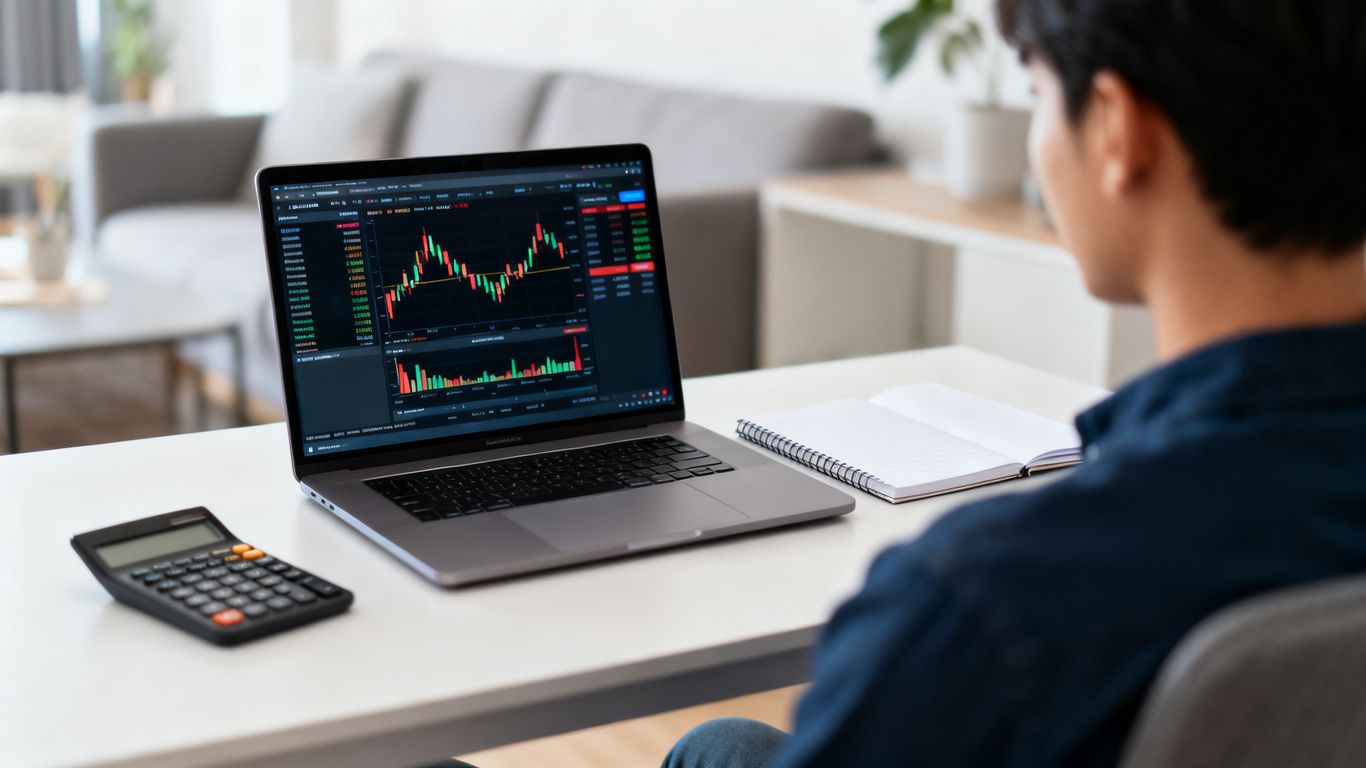
Your account structure affects how trades are priced, margined and settled. Before funding an account, check the legal entity, regulatory status, client-money arrangements and precise product terms. A low advertised spread is not enough if execution, financing or leverage makes the total cost unsuitable for your approach.
Comparing spread betting, CFDs and spot forex
Spread betting, CFDs and retail spot forex can all provide exposure to currency-price movements, but their legal treatment, tax position, contract details and financing arrangements may differ by jurisdiction and provider. You should read the relevant product disclosure documents rather than assuming that two similarly named accounts work identically.
Consider whether you need physical currency delivery, or simply price exposure. Most short-term retail traders are assessing price movement, but that does not remove the possibility of rapid losses when leverage is involved. Choose the structure you understand well enough to explain in your own words.
How to assess regulation, client-fund protection and execution
Check which company operates the account, where it is authorised, and what protections apply to your money in your jurisdiction. Look for clear information about order execution, complaints, negative-balance treatment and the handling of client funds. If key policies are difficult to find, treat that as a reason to pause rather than a minor inconvenience.
Execution quality matters because the displayed price may not be the price at which your order fills. Review the provider’s terms for slippage, rejected orders, requotes and trading hours. You want a service whose restrictions are visible before you commit capital.
Understanding leverage, margin and position sizing
Leverage allows you to control a larger notional position with a smaller margin deposit. It does not make the underlying trade safer; it magnifies the effect of ordinary price movement on your account equity. A position can therefore be too large even when the required margin looks affordable.
Keep margin available for normal fluctuation and calculate position size from the distance to your stop-loss. Small risk per trade gives you more room to learn, adjust and survive a run of losing trades without forcing an emotional recovery attempt.
Checking spreads, commissions, swaps and other trading costs
Your trading cost may include the spread, commission, overnight financing, conversion charges and possible inactivity or withdrawal fees. Compare like with like: a tight spread with a commission is not automatically cheaper than a wider all-in spread. Costs also vary by pair, session and account type.
Use a simple comparison before opening an account:
| Cost or feature | What to check | Why it matters |
|---|---|---|
| Spread | Typical and volatile-market pricing | Affects the distance your trade must move before breakeven |
| Commission | Per side or round turn | Changes the true cost of frequent trading |
| Swap | Long and short overnight rates | Matters when positions remain open after the session |
| Execution | Slippage and order handling | Can alter entry, exit and realised risk |
After comparing these items, estimate the cost using the holding period and frequency you actually expect. A broker that suits a short-term strategy may be less suitable for a position held over several days.
Using a demo account before risking real money
A demo account lets you practise platform controls, order types and trade management without putting live funds at risk. It cannot fully reproduce live psychology or every aspect of execution, but it can expose basic mistakes such as incorrect lot sizes or misunderstood stops.
Use the demo as a rehearsal, not as proof that a strategy will make money. Record entries, exits and reasons for each trade, and move towards live trading only when you can follow your rules consistently rather than after one unusually profitable week.
Build a structured forex trading plan
A trading plan converts a general market view into repeatable decisions. It should tell you when you may trade, what qualifies as a setup, how much you can lose and what would invalidate your idea. Without those decisions written down, you are likely to improvise precisely when pressure is highest.
Selecting a trading style and realistic time commitment
Day trading, swing trading and scalping require different levels of attention, transaction-cost tolerance and emotional stamina. Choose a timeframe that fits when you can actually monitor the market, not the one that appears most exciting. If you work during the London session, for example, a strategy dependent on constant New York-session monitoring may be impractical.
Start with one or two instruments and a manageable routine. A smaller field of study gives you more opportunity to learn how a market behaves across trends, ranges and news rather than repeatedly starting from zero.
Defining entry, exit and invalidation conditions
Write down the exact event that permits an entry, the level or condition that invalidates the idea, and the circumstances in which you will take profit. Your invalidation point should explain that the original premise is no longer valid; it should not be moved simply because you dislike the loss.
A complete setup might require a higher-timeframe trend, a return to a marked level and confirmation from price action. The details are yours to choose, but they must be specific enough that another person could understand why you entered.
Combining technical analysis with fundamental analysis
Technical analysis helps you describe market structure, momentum, support and resistance. Fundamental analysis gives context about interest rates, economic growth, inflation and political risk. They do not need to produce identical forecasts; their purpose is to help you understand both the chart and the conditions surrounding it.
If the chart offers a clean setup just before a major central-bank announcement, the event may change your execution decision even if the technical pattern remains attractive. Context should refine your plan, not become a reason to invent a trade after the fact.
Choosing markets that match your strategy and risk tolerance
Different pairs have different volatility, liquidity and reaction patterns. A strategy that depends on quiet, orderly movement may struggle on a pair that regularly makes large intraday swings. Conversely, a strategy built for expansion may produce too few opportunities in a narrow range.
Choose a market after reviewing its typical spread, active sessions and average movement. Your risk tolerance should influence the instrument as much as your interest in it; a familiar market is not automatically a suitable one.
Recording trades in a journal and reviewing performance
A journal should capture the setup, entry, stop, target, size, market conditions and your state of mind. Add a screenshot before and after the trade where possible. Over time, this record helps you separate a sound losing trade from a careless winning trade.
Review the journal on a fixed schedule and look for patterns rather than isolated results. You may discover that your best decisions occur at one session, or that late entries and moved stops account for most avoidable losses.
Learn how to analyse currency markets
Analysis is useful when it improves a decision, not when it fills your screen with information. Begin with broad structure, narrow the context through selected timeframes, and then check whether a specific setup meets your written rules. A clear process is usually more valuable than a large collection of indicators.

Reading trends, ranges, support and resistance
A trend is usually described through successive higher highs and higher lows, or lower highs and lower lows. In a range, price repeatedly reacts between areas of support and resistance instead of progressing cleanly in one direction. These are working descriptions, not permanent labels.
Mark zones rather than pretending every level is exact to the pip. Watch how price behaves when it reaches them: rejection, consolidation and decisive breaks provide different information. A break that immediately fails may be a false breakout rather than confirmation of a new trend.
Using price action, indicators and multiple time frames
Price action shows what buyers and sellers have actually done, while indicators process price or volume into a particular measurement. Moving averages, momentum tools and volatility measures can add structure, but none removes uncertainty. Use only tools that answer a question your plan genuinely has.
A higher timeframe can provide directional context, a middle timeframe can define the setup, and a lower timeframe can refine execution. Too many timeframes often create conflicting signals, so decide in advance which one has priority when they disagree.
Interpreting economic calendars and central-bank decisions
An economic calendar helps you identify scheduled events such as inflation, employment and interest-rate announcements. Read the previous figure, consensus expectation and release time, then consider whether the event affects the currencies in your pair. The initial move may be followed by a sharp reversal as traders digest the details.
Central-bank communication can matter as much as the numerical decision. A rate held unchanged may still move markets if the accompanying statement changes expectations about future policy. Build a routine around preparation rather than reacting to a headline after the move has begun.
Understanding volatility around high-impact announcements
High-impact announcements can widen spreads, increase slippage and produce rapid two-way movement. A technically attractive entry immediately before a release may have a very different risk profile from the same entry during a quiet period. Your plan should state whether you avoid such windows, reduce exposure or use a specific event strategy.
Do not assume that a stop-loss guarantees the exact loss you calculated in every market condition. Gaps and fast movement can affect the fill. If you cannot tolerate that uncertainty, staying flat is a valid trading decision.
Avoiding analysis overload and conflicting signals
Analysis overload often begins with a reasonable question and ends with several indicators giving incompatible answers. Limit your chart to the information needed to identify context, setup and risk. If you cannot explain why a tool is present, remove it for a period and see whether decision quality changes.
A short pre-trade routine is easier to follow than a constantly expanding checklist:
- Identify the higher-timeframe market condition.
- Mark the nearest meaningful support and resistance zones.
- Check scheduled events and current liquidity.
- Define entry, invalidation, target and position size.
- Decide what would make you stand aside.
After this routine, you should be able to state the trade idea in one or two sentences. If you still need several contradictory explanations, the market may not offer a sufficiently clear setup.
Manage risk before placing a trade
Risk management begins before the order ticket opens. First decide how much of your account you are prepared to lose if the idea fails, then build the position around that number. This approach keeps a single trade from quietly becoming a referendum on your skill.
Calculating position size from your account risk
Choose a fixed cash risk or percentage of account equity, calculate the distance between entry and stop, and then determine the position size that keeps the potential loss within your limit. You also need the instrument’s pip value, contract specification and account currency conversion.
For example, risking £50 does not mean opening a standard lot. The correct size depends on the stop distance and the value of each pip for the pair. Check the broker’s calculator or contract details, and verify the result before sending the order.
Setting stop-loss and take-profit levels
A stop-loss belongs at the point where your market premise is invalid, provided that the resulting position size remains acceptable. A take-profit level can be based on the next significant zone, a measured move or a predefined exit rule. Neither should be placed merely to create an attractive-looking ratio.
Avoid widening a stop after entry to avoid accepting a loss. If the market needs more room than your account risk allows, reduce the position or skip the trade. The decision is made before entry, when you can think clearly.
Managing leverage, margin and potential drawdown
Monitor both the risk on the current trade and the combined exposure across correlated positions. Several trades that all depend on a stronger dollar may create one large directional bet, even if each individual position appears small. Leave enough margin for ordinary volatility and avoid treating available buying power as a target.
Drawdown is the decline from an account peak or reference balance to a later low. It affects confidence as well as capital, so define a personal drawdown threshold at which you reduce size or pause. A trading plan that ignores recovery pressure is incomplete.
Applying risk-to-reward and daily loss limits
Risk-to-reward compares the amount you are prepared to lose with the amount you aim to make, but it should not be used alone. A high ratio does not rescue a setup with a very low probability of success. Combine it with historical results and a clear reason for the target.
Daily loss limits protect you from a bad session becoming a bad month. Set the limit before trading and stop when it is reached. You can also set a maximum number of trades, since repeated attempts often follow frustration rather than new information.
Why protecting capital matters more than maximising individual gains
Capital gives you the ability to participate in future opportunities. Chasing the largest possible return from one trade usually encourages oversized positions, loose invalidation and emotional decisions. A smaller, repeatable risk model may feel slow, but it keeps your learning process alive.
Your objective is not to win every trade. It is to ensure that a normal sequence of losses remains survivable and that your profitable decisions have time to matter.
Execute and manage forex trades effectively
Execution is where analysis meets market conditions. The order type, spread, available liquidity and timing can all change the result compared with the chart you studied. Before clicking, confirm the pair, direction, size, stop, target and maximum acceptable loss.
Choosing between market, limit, stop and stop-loss orders
A market order prioritises immediate execution, while a limit order seeks a specified price or better. A stop order becomes active after price reaches a chosen level, and a stop-loss is used to limit loss if the trade moves against you. Each serves a different purpose, so do not use a market order simply because it is the default button.
Check how your provider handles orders during fast markets. A pending order may fill differently from your intended price, and a stop may experience slippage. The order instruction should match the logic of your setup.
Checking spreads, slippage and available liquidity
Before entry, look at the current spread rather than relying only on the typical figure. Thin liquidity and scheduled events can make the spread expand. Slippage may occur when the available prices change between submission and execution.
If the cost or likely fill makes the trade invalid, do not force it. Waiting for conditions to normalise is often more disciplined than changing the stop or target to accommodate a poor entry.
Managing open positions without emotional decisions
Once a position is open, return to the conditions written before entry. Do not move a stop because a short-term candle looks uncomfortable, and do not take profit early solely because a position is temporarily positive. If new information genuinely invalidates the premise, act according to the plan rather than improvising a story.
You can reduce emotional pressure by setting alerts, limiting screen time and deciding in advance what you will do at key levels. Management should be a process, not a live debate with every price tick.
Handling overnight funding, gaps and weekend exposure
Holding a position beyond the trading day may create swap or financing costs and exposes you to movement while you are away from the screen. Weekend gaps can occur when news or sentiment changes while the market is closed. These risks are separate from the original chart setup and should be included in your plan.
If you hold overnight, know the applicable financing rate, cutoff time and market reopening schedule. If you do not understand the exposure, close before the relevant period rather than discovering the cost after the fact.
When to close a trade early and when to follow the plan
Close early when your predefined invalidation condition occurs, when a material event changes the premise, or when the trade no longer fits your documented risk. Do not close simply because the market has not moved quickly enough unless time-based management is part of the strategy.
Following a plan does not mean refusing to adapt. It means defining in advance which information matters and responding consistently when it appears. That distinction prevents both stubbornness and impulsive exits.
Develop discipline and improve your results
Trading skill develops through repetition, measurement and honest review. A profitable week can contain poor decisions, while a losing week can contain well-executed trades. Judge the process over a meaningful sample instead of allowing one outcome to rewrite your rules.
Controlling common trading biases and emotional reactions
Confirmation bias makes you search for evidence that supports an existing view, while loss aversion can make a losing position feel more urgent than a profitable one. Recency bias can also cause you to change a strategy after a short run of results. Naming these tendencies makes them easier to spot.
Use objective prompts before entry: what is the setup, what invalidates it, and would you take it if the previous trade had not happened? These questions create a small pause between emotion and action.
Testing a strategy with historical and demo data
Backtesting can show how a ruleset behaved across historical conditions, though it depends on data quality and realistic assumptions about spreads and execution. Demo testing adds a live-market rehearsal without financial exposure. Neither guarantees future performance.
Test one change at a time and record the rules precisely. If you alter entry, stop and exit criteria together, you will not know which change affected the results. A simulator or trading practice tool can also help you rehearse order handling and risk routines.
Measuring win rate, expectancy and drawdown
Win rate is the percentage of trades that close profitably, but it says little without average win and average loss. Expectancy estimates the average result per trade over a sample, while drawdown shows how difficult the path may be. Track all three alongside costs and execution quality.
A simple review table can include setup type, market, session, result in risk units and whether you followed the plan. The purpose is to identify repeatable strengths and costly habits, not to produce an impressive spreadsheet.
Recognising overtrading, revenge trading and excessive risk
Overtrading often appears as taking marginal setups after the planned opportunities have passed. Revenge trading follows a loss with an attempt to recover quickly, usually through larger size or weaker criteria. Excessive risk may begin with a small adjustment that gradually becomes normal.
Watch for practical warning signs:
- You trade outside your stated session or market list.
- You increase size after a loss without a written rule.
- You remove or widen stops after entry.
- You take several similar positions without checking correlation.
These behaviours are process failures, not character judgements. A hard stop for the day, smaller size and a short review can interrupt the cycle before it compounds.
Knowing when to pause, adapt or seek professional guidance
Pause when your sleep, finances or concentration are affecting decisions, or when you repeatedly breach your own limits. Adapt only after reviewing a sufficient sample and identifying a specific weakness. If you cannot explain the risks or product terms, seek independent professional guidance before trading live.
For traders considering an evaluation route, GoldFunding describes both Classic and Rapid evaluation structures, with documented profit targets and loss limits. The relevant terms should be read carefully and matched against your own plan; an evaluation is not a substitute for risk control.
Conclusion
Learning how to trade in foreign exchange is a gradual process of understanding the market, choosing suitable tools, defining risk and repeating a decision process you can review. Protect your capital first, stay sceptical of easy promises, and only consider starting an evaluation when your strategy and discipline are ready for the rules involved.
Frequently Asked Questions
Is forex trading suitable for beginners?
It can be studied by beginners, but it involves complex products and the possibility of rapid losses. Start with education, a demo account and a clearly limited risk plan before considering live trading.
How much money do you need to start forex trading?
There is no universal minimum that makes trading appropriate. The amount depends on the account terms, position-size rules and loss you can genuinely afford, not on the largest position a broker allows.
What is the best currency pair for a beginner?
Many beginners start with highly traded major pairs because pricing and educational information are often easier to access. The better choice is the pair whose costs, volatility and active sessions you understand.
How often should you trade forex?
Trade frequency should come from your strategy and available opportunities, not from a daily quota. Some plans produce several trades a week, while others wait for a specific market condition.
What is a stop-loss in forex trading?
A stop-loss is an order or instruction intended to close a position when price reaches a chosen level against you. It helps define risk, although fast markets can result in slippage or a different fill price.
Can you trade forex around economic news?
You can, but high-impact announcements may cause wider spreads, rapid movement and slippage. Decide in advance whether your strategy avoids, reduces or specifically tests trading during those events.
How long does it take to become consistent at forex trading?
There is no reliable timetable. Consistency requires a tested process, sufficient trade data, controlled risk and the patience to improve weaknesses without repeatedly changing strategies after short-term results.